

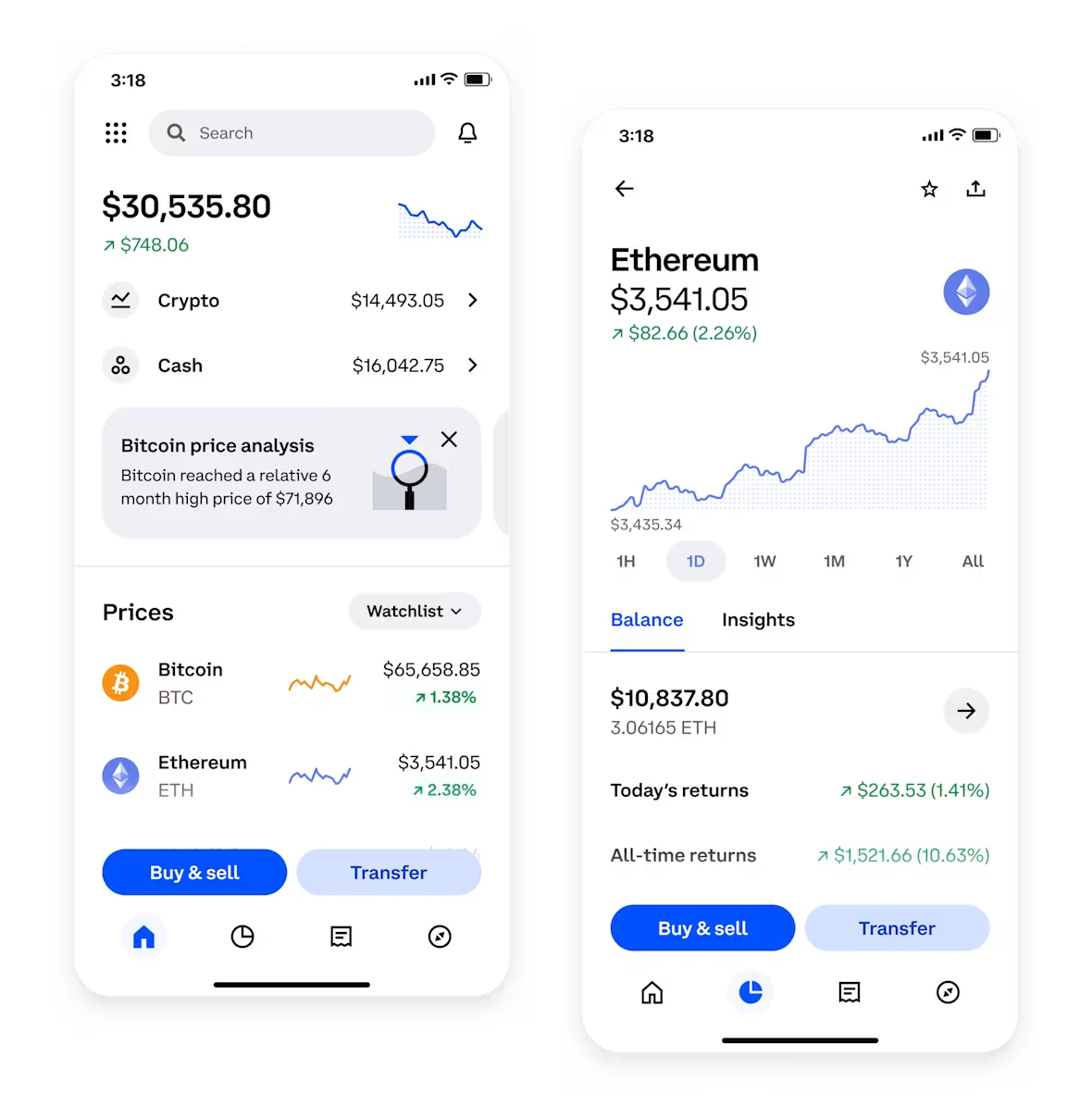


USDC Stablecoin: Key Relationships with Ethereum, Solana, and Other Major Cryptocurrencies
In the dynamic world of cryptocurrency, stablecoins like USD Coin (USDC) have become fundamental pillars. While USDC itself is a digital dollar pegged 1:1 to the US currency, its true power and utility are unlocked through its deep interconnections with other major blockchain networks and their native coins. Understanding what coins USDC is related to is crucial for grasping the modern digital asset ecosystem.
Foremost, USDC is intrinsically linked to Ethereum (ETH). Initially launched as an ERC-20 token, USDC lives on the Ethereum blockchain, relying on its security and decentralized network. Every USDC transaction on Ethereum requires ETH to pay for gas fees. This symbiotic relationship makes ETH the primary fuel for the most widely used version of USDC, cementing their operational bond.
However, USDC's reach extends far beyond Ethereum. To achieve scalability and interoperability, Circle, the consortium behind USDC, has issued the stablecoin on multiple leading blockchains. This creates direct relationships with their native coins. On Solana (SOL), USDC benefits from high speed and low transaction costs, with SOL needed for fees. The same model applies to Avalanche (AVAX), where USDC is a cornerstone of DeFi applications, and transactions are powered by AVAX. Other significant relationships include USDC on Polygon (MATIC), a layer-2 scaling solution for Ethereum, and on Stellar (XLM), which facilitates fast, low-cost cross-border payments.
Furthermore, USDC is deeply intertwined with the decentralized finance (DeFi) universe and its governance tokens. It serves as a primary trading pair on decentralized exchanges (DEXs) like Uniswap (governed by UNI) and Curve (governed by CRV). Users often provide USDC as liquidity in pools on these platforms, earning fees and governance tokens in return. This integration makes USDC a key asset for earning yields and participating in the governance of major DeFi protocols.
Beyond pure cryptocurrencies, USDC's relationship with Bitcoin (BTC) is also noteworthy. While not native to the Bitcoin blockchain, USDC acts as a crucial bridge. It is a major trading pair for BTC on both centralized and decentralized exchanges, allowing for efficient entry, exit, and hedging strategies. Wrapped versions of Bitcoin on other chains also frequently use USDC as a counterpart in liquidity pools.
In conclusion, USD Coin is far more than a standalone digital dollar. Its ecosystem is defined by vital relationships with the native coins of the blockchains it inhabits, such as ETH, SOL, AVAX, and MATIC, which power its transactions. It is further connected to the governance tokens of DeFi protocols where it is heavily utilized. These strategic integrations ensure USDC remains a highly liquid, accessible, and versatile asset, forming the stable core around which the volatile yet innovative cryptocurrency market continues to evolve and grow.

发表评论